


Impeller Blade
An impeller blade is a rotating component equipped with vanes or blades used in turbomachinery (e. G. Centrifugal pumps). Flow deflection at the impeller vanes allows mechanical power (energy at the vanes) to be converted into pump power output. An impeller is a rotating component of a centrifugal pump which transfers energy from the motor that drives the pump to the fluid being pumped by accelerating the fluid outwards from the center of rotation.It can be cheaper to cast an impeller and its spindle as one piece, rather than separately.They are designed to generate fluid flow and provide mechanical energy transfer. Impeller blades can have different shapes and configurations depending on the specific requirements of the application.
Product Introduction
Shenyang Hengjia Yisheng Trading Co., Ltd. is a professional supplier of watercraft spare parts. Located in Shenyang, a traditional industrial base in Northern China, we integrate strong R&D capability and manufacturing forces to serve customers worldwide. By upholding the concept of "excellent quality, fair price, integrity management" during past years, we've gained a high reputation in the international market by providing our customers with cost-effective products and perfect after-sales service.
Why Choose Us
Rich Product Range
Our company can produce different types of motorboat hulls, motorboat front bumpers, motorboat rear bumpers, screw gaskets, motorboat throttles, motorboat hoses, sliding bearing shells and more.
Wide Sales Area
Our products cover nearly 30 provinces and cities in China and are exported to North America, South America, Oceania, Europe, Asia-Pacific, etc.
Customizable
In addition to providing standard spare parts for various models of Sea-Doo ships, we also provide spare parts of other brands, and provide customized design and manufacturing services according to customer requirements; providing standard spare parts and OEM/ODM services to hundreds of customers.
Leading Service
We have many years of industry experience and a complete production management, quality supervision, sales service operation system. Whether you are looking to purchase marine spare parts or steering gear parts, just email your requirements and we can customize the product for you.
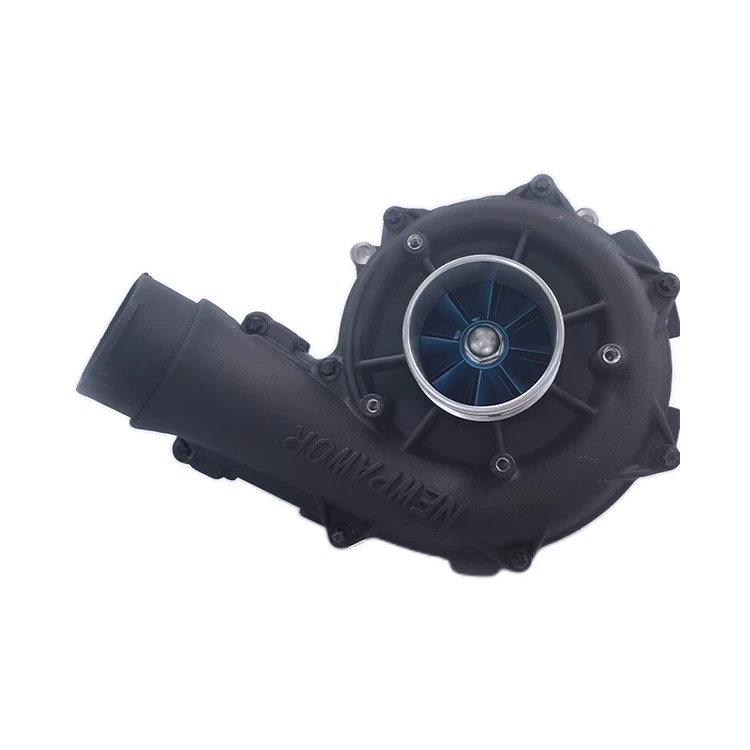
The Supercharger For Seadoo is a sophisticated and high-precision component that enhances the capabilities of your Sea-Doo watercraft's engine. It operates on the fundamental principle of forced induction, whereby it compresses incoming air, allowing more oxygen to be fed into the engine's combustion chambers. This increased oxygen supply enables a more efficient and powerful combustion process, resulting in enhanced acceleration and top-end speed.
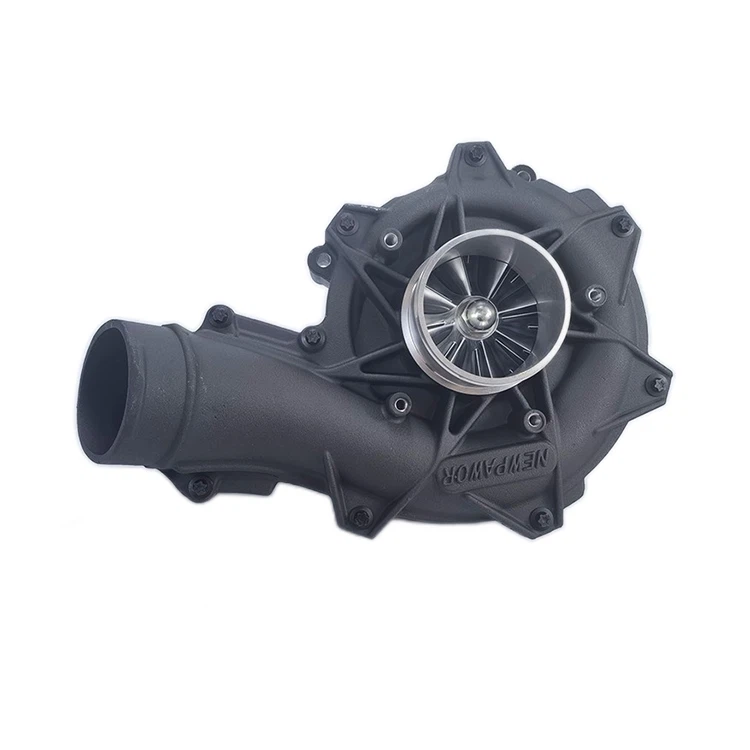
Supercharger For Yamaha work by compressing the incoming air, which allows more fuel to be burned, generating additional power. This extra power translates into faster acceleration and higher top speeds, giving you an adrenaline-pumping ride.

The Supercharger Bearing is meticulously engineered and crafted using high-quality materials. Its primary purpose is to support the rotation of the supercharger impeller, allowing it to spin freely and efficiently. By minimizing friction and ensuring smooth operation, the bearing helps maximize the airflow and pressure generated by the supercharger, leading to improved engine performance.

The stator plate is a critical component in the electrical system of a Sea-Doo watercraft, responsible for generating and regulating the electrical power needed to operate various electrical components. We understand the importance of a reliable and efficient electrical system, which is why we have developed the Stator Plate-a crucial plate designed to harness and distribute electrical power for optimal watercraft performance.

The Jet Ski One Way Gear is a fundamental component in Yamaha's wide range of products, from motorcycles to marine engines and more. Yamaha, renowned for its commitment to innovation and performance, places great emphasis on the quality and precision of its gear assemblies. These assemblies are responsible for transmitting power effectively, whether it's in the form of engine torque to the wheels of a motorcycle or the propeller of a boat.
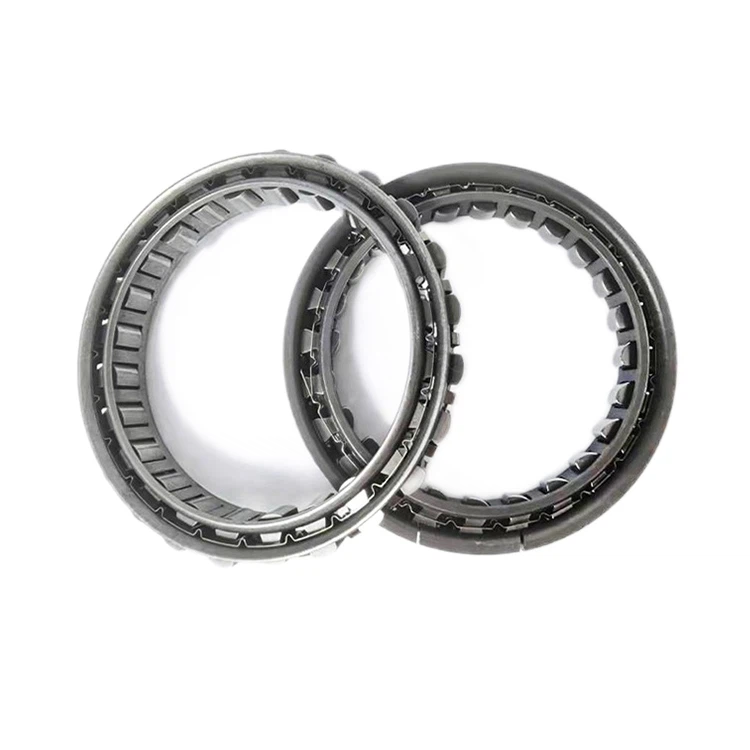
Gear Bearing For Yamaha is precision-engineered to handle the demands of various power transmission applications, from the gearbox of a high-performance motorcycle to the drivetrain of a rugged ATV. These bearings are crafted using high-quality materials and advanced manufacturing techniques, resulting in components that excel in durability and longevity.

Gear Bearing For Yamaha is precision-engineered to handle the demands of various power transmission applications, from the gearbox of a high-performance motorcycle to the drivetrain of a rugged ATV. These bearings are crafted using high-quality materials and advanced manufacturing techniques, resulting in components that excel in durability and longevity.

A Jet Ski valve typically refers to the various valves used in the engine and fuel system of a personal watercraft, commonly known as a Jet Ski. These valves are critical components that ensure proper operation and performance of the engine by controlling the flow of air, fuel, and exhaust gases at the right times.

Intake And Exhaust Valve For Yamaha
The Intake And Exhaust Valve For Yamaha is a crucial component in the engine system of a Yamaha WaveRunner, responsible for controlling the flow of air and exhaust gases during the combustion process. We understand the significance of optimizing engine performance and has developed the Intake/Exhaust Valve-an essential component designed to enhance airflow, improve combustion efficiency, and maximize overall engine output.
What is Impeller Blade
An impeller blade is a rotating component equipped with vanes or blades used in turbomachinery (e. G. Centrifugal pumps). Flow deflection at the impeller vanes allows mechanical power (energy at the vanes) to be converted into pump power output. An impeller is a rotating component of a centrifugal pump which transfers energy from the motor that drives the pump to the fluid being pumped by accelerating the fluid outwards from the center of rotation.It can be cheaper to cast an impeller and its spindle as one piece, rather than separately.They are designed to generate fluid flow and provide mechanical energy transfer. Impeller blades can have different shapes and configurations depending on the specific requirements of the application.
The design of the impeller blades can improve efficiency and performance. Different types of impeller blades, such as airfoil blades and closed impellers, have good aerodynamic performance and high efficiency. Although airfoil blades are prone to wear when conveying airflow media with high dust concentration, their high efficiency and strength make them still very popular in many industrial applications. Closed impellers are suitable for conveying clean water and domestic water, with high efficiency and long service life, and are suitable for occasions requiring stable flow and low noise.
The design of the impeller blades also enhances structural strength and rigidity. Although the manufacturing process of airfoil blades and flat straight blades is complex, their high strength and rigidity make them perform well under high pressure and high speed conditions. In particular, airfoil blades, on the basis of high strength and rigidity, also have good aerodynamic characteristics, and are suitable for occasions requiring high pressure and high efficiency.
The design of impeller blades adapts to different working conditions. Different types of impeller blades, such as forward-inclined impellers, radial impellers, and backward-inclined impellers, are respectively suitable for occasions requiring higher pressure, balancing pressure and flow requirements, and reducing noise and improving efficiency. This diverse design enables impeller blades to be widely used in various industrial and civil fields to meet different performance requirements.
Types of Impeller Blade
An open impeller has vanes attached to a central hub without a shroud or cover. They are used for pumping low-viscosity fluids without suspended solids and are easy to clean and maintain. Uses they are commonly used in chemical processing, water treatment, and food industries. Strengths and weakness | advantages and disadvantages one strength of open impellers is that they are easy to manufacture. But a weakness is that they have lower efficiency compared to other types.
A closed impeller has vanes that are surrounded by a shroud or cover. This improves its efficiency and allows it to pump fluids with suspended solids. Usage of closed impeller closed impellers are commonly used in wastewater treatment, paper and pulp, and mining industries. Strength and weakness of closed impeller the strength of a closed impeller is that it is efficient at handling solids. But, a weakness is that it is challenging to clean and maintain.
A semi-open impeller has vanes attached to one side of a central hub with the other side being open. They are suitable for pumping fluids with suspended solids. These are used in chemical, food processing, and mining industries. Differences between open and semi-open impeller semi-open impellers have higher efficiency than open impellers but are more challenging to manufacture and maintain.
A recessed impeller has a shroud with a cavity that allows it to handle fluids with high solid content without clogging. They are commonly used in slurry pumping and wastewater treatment. Strength and weakness of closed impeller one strength of recessed impellers is their ability to handle high solid content, but a weakness is their low efficiency.
A vortex impeller has a recessed chamber that creates a vortex, which allows it to handle fluids with high gas content. They are commonly used in the oil and gas industry. Advantages and disadvantages of vortex impellers | strengths and weaknesses they are efficient in pumping liquids with entrained air or gas. One strength of vortex impellers is their ability to handle high gas content, but a weakness is their low efficiency.
Working Principle of Impeller Blade
Impeller blade are axial fluid directing rotating elements for delivering or absorbing energy. These elements with in general few and large helicoidal shaped blades give very high degree of swirling in a vessel or tube. The flow pattern generated in the fluid resembles helix. Impeller dynamics can be modelled by both bernoulli's principle and newton's third law. The impeller (propell) is sometimes colloquially known as a screw or a rotor.
Rotating impellers in agitated vessel's are used to mix fluids and/or hold particles suspended in the vessel. Mostly to combine materials with different properties in the form of solids, liquids and gas. Mixing fluids and particles properly in a vessel or container is very important in order to reduce gradients such as temperature or concentration.
Axial flow impellers impose essentially shear stress to the fluid, and are used, for example, to mix immiscible liquids or in general when there is a deformable interface to break. Another application of axial flow impellers are the mixing of very viscous fluids.
Axial flow impellers impose essentially bulk motion, and are used on homogenization processes, in which increased fluid volumetric flow rate is important.
Shear stress may be rough to mammalian cell and of no importance to bacteria
Tip-speed cause shear stress and impeller design may reduce tip-speed with constant capacity
Cavitation can occur in many ways on an impeller surface. The two most common types of propeller cavitation are suction side surface cavitation and tip vortex cavitation.
Impeller Blade Pitch Control
Impeller blade pitch control is used in propeller pumps with axial and mixed flow impellers to change the pitch of the impeller blades during operation. At constant rotational speed, impeller blade pitch control changes the flow rate, head and power input. Of the pump, enabling optimal closed-loop control with low losses. Considerable outlay is required for this configuration, however.
The impeller blade pitch control method most frequently used in centrifugal pumps takes the form of an axially displaceable, bearing-supported adjusting rod in a hollow pump shaft. It can absorb adjusting forces of up to 600 kn in large cooling water pumps, for example, or even greater forces in special-purpose applications. The adjusting rod is moved in the axial direction by a mechanical screw actuator or hydraulic piston.
On smaller propeller pumps, blade pitch is frequently adjusted manually with transmission gearing (also see adjustment mechanism).
The impeller blade pitch can also be adjusted by an adjustment mechanism which is fitted in the impeller hub, together with the hydraulic or electric actuator, or by adjustment mechanisms which rotate the blade trunnions via rotation of the adjusting rod. Impeller blade pitch control as applied to centrifugal pumps evolved from early designs used for ship propellers and water turbines.
The outer profile (see flow profile) and inner profile (hub profile) of the adjustable blades must be located on concentric spherical surfaces to avoid efficiency-reducing gaps (see clearance gap width). This design requirement determines the shape of the pump casing and the impeller hub in the flow area of the impeller. The spherical shape is not always favourable from a hydraulic perspective, however. This is a disadvantage shared by adjustable blades without impeller blade pitch control, which require dismantling of the rotating assembly to change the pitch.
Process and product considerations
Impeller blade is often based on finding a balance between flow pattern, shear, and pumping capacity that suits your specific application. How do you know what balance you need to strike between the two? It depends on the desired outcome, ingredient properties, and vessel geometry among other factors.
Ingredient properties
Are the liquids used in your application miscible or immiscible? How viscous are the liquids? Do the solids you are mixing in have a tendency to agglomerate? Processes combining miscible liquids don't often require high-shear impellers because the mixing is driven primarily by the flow of the liquid. In this case, it is better to go with a radial or axial flow impeller, depending on your process requirements. Impeller blade are specifically designed to be more efficient at certain viscosities.
Desired outcome
If the end goal is simply to mix a soluble solid and a liquid, a propeller or hydrofoil will get the job done. If the end-goal is to suspend an insoluble material into a liquid, however, you will need a high-shear impeller. If you want to disperse a gas throughout the mixture, you will need a dispersion blade or other high-shear impeller.
Vessel geometry
Most mixing tanks are cylindrical in design with the agitator coming down from the top of the tank with the impeller located near the bottom of the tank. Impeller diameters are typically configured for the specific application, but theoretically speaking, the impeller diameter should be about the same as the distance between the bottom of the impeller and the bottom of the tank.
Baffles also play a big role in tank geometry. Will the tank have baffles? Will the tank have 3 or 4 baffles? Baffles can drastically increase the efficiency and effectiveness of your mixer because they help create an axial flow pattern in the tank. Avoiding solid body rotation is an important part of impeller selection and tank geometry, and baffles can help with this.
Materials Used in Impeller Blade
Stainless steel: Stainless steel impellers are corrosion-resistant and suitable for handling fluids with high acidity or alkalinity. They find applications in chemical processing, wastewater treatment, and food processing industries.
Cast iron: Cast iron impellers are robust and cost-effective, ideal for handling abrasive fluids in applications like mining, construction, and agriculture.
Bronze: Bronze impellers offer excellent corrosion resistance and are commonly used in marine applications, water supply systems, and hvac systems.
Aluminum: Aluminum impellers are lightweight and cost-effective, suitable for low-pressure applications such as irrigation systems and water circulation pumps.
Plastic (polypropylene, pvc): Plastic impellers are corrosion-resistant and lightweight, making them suitable for handling corrosive fluids in chemical processing and water treatment plants.
Basic of Impeller Blade Design
Blade shape
Blade shape is one of the key factors in impeller design. Blades are usually designed to have a streamlined shape to minimize drag and capture the kinetic energy of the fluid.
The cross sectional shape of the blades can be symmetrical or asymmetrical depending on the application requirements. Symmetrical blades are typically used to generate lift and asymmetrical blades are used to generate power.
The curves of the leading and trailing edges of the blades also affect the fluid flow and pressure distribution and therefore require special attention.
Number of blades
The number of blades is one of the important parameters in impeller design. The number of blades affects the efficiency and performance of the impeller.
More blades usually capture the kinetic energy of the fluid better, but may result in higher drag and friction losses. Fewer blades may reduce drag, but may be less efficient.
The choice of the number of blades depends on the requirements of the particular application and needs to be weighed.
Blade angle
The blade angle (or blade twist angle) is critical in impeller design. The blade angle determines the direction and velocity of the fluid entering and leaving the impeller.
The inlet angle of the blade determines the entry angle of the fluid, which affects the performance and efficiency of the impeller. Typically, the inlet angle of the blades needs to be optimized to capture the maximum amount of kinetic energy of the fluid.
The exit angle of the blade determines the direction of fluid departure, which also needs to be optimized to ensure that the fluid leaves the impeller with high efficiency.
Blade curvature and thickness
The curve shape and thickness distribution of the blades are also design considerations. Proper curvature and thickness can improve the aerodynamic performance of the blade.
Curved blades can reduce centrifugal force and increase kinetic energy capture, but excessive curvature can lead to instability.
Thickness distribution usually needs to be optimized between the root and edge of the blade to balance strength and weight.
FAQ
Hot Tags: Impeller Blade, China Impeller Blade manufacturers, suppliers, factory, engine body parts, engine european parts, engine heads, engine key parts, engine asian parts, engine cast parts
You Might Also Like


Send Inquiry
