

What are the examples of passive cooling systems?
Passive cooling systems are essential components in various industries, offering energy - efficient and reliable solutions for temperature regulation. As a cooling system supplier, I have witnessed the growing demand for these systems due to their numerous advantages, such as lower operating costs, reduced environmental impact, and minimal maintenance requirements. In this blog, I will explore several examples of passive cooling systems that have been widely used in different applications.
1. Natural Ventilation Systems
Natural ventilation is one of the oldest and most straightforward passive cooling methods. It relies on the natural movement of air to remove heat from a space. There are two main types of natural ventilation: cross - ventilation and stack ventilation.
Cross - ventilation occurs when air enters a building through one opening and exits through another on the opposite side. This is achieved by strategically placing windows, doors, or vents to create a pressure difference that drives the airflow. For example, in a residential building, placing windows on opposite sides of a room allows fresh air to enter and warm air to exit, effectively cooling the space.
Stack ventilation, on the other hand, takes advantage of the difference in air density between warm and cool air. Warm air rises, creating a low - pressure area at the top of a building. Cool air is then drawn in from the bottom through vents or openings. This principle is commonly used in industrial buildings, warehouses, and large - scale structures. For instance, in a factory, vents at the roof level allow hot air to escape, while intake vents at the ground level bring in cooler air. The effectiveness of natural ventilation systems can be enhanced by using features such as louvers, which can be adjusted to control the airflow direction and volume.
2. Evaporative Cooling Systems
Evaporative cooling is a process that uses the latent heat of vaporization to cool the air. When water evaporates, it absorbs heat from the surrounding environment, resulting in a decrease in temperature. There are direct and indirect evaporative cooling systems.
Direct evaporative cooling systems work by passing air through a wet medium, such as a pad or a mist. As the air passes through the wet surface, water evaporates, cooling the air. These systems are commonly used in dry climates, where the low humidity allows for efficient evaporation. For example, in arid regions, evaporative coolers are often installed in homes and small commercial buildings. They are relatively inexpensive to operate and can provide significant cooling effects.
Indirect evaporative cooling systems, on the other hand, use a heat exchanger to cool the air without adding moisture directly to it. The process involves evaporating water on one side of the heat exchanger, which cools the other side where the supply air flows. This method is suitable for areas where high humidity levels are a concern, as it can cool the air without increasing its moisture content. For instance, in data centers, indirect evaporative cooling systems are used to maintain a stable temperature and humidity level, protecting sensitive electronic equipment.
3. Thermal Mass Systems
Thermal mass refers to materials that can absorb, store, and release heat slowly. Common materials used for thermal mass include concrete, bricks, and stone. These materials have a high heat capacity, which means they can store a large amount of heat energy without a significant increase in temperature.
In a building, thermal mass can be used to moderate temperature fluctuations. During the day, when the outside temperature is high, the thermal mass absorbs heat from the interior space, preventing it from overheating. At night, when the outside temperature drops, the thermal mass releases the stored heat, keeping the interior warm. For example, in a passive solar building, thick concrete walls are used as thermal mass. The walls are exposed to sunlight during the day, absorbing heat, and then release it gradually during the night.
Thermal mass systems can also be combined with other passive cooling methods. For example, in a building with natural ventilation, the thermal mass can help to cool the incoming air. As the cool air passes over the thermal mass, it absorbs some of the stored heat, further reducing the temperature inside the building.
4. Radiative Cooling Systems
Radiative cooling is a process by which an object emits thermal radiation to the cold outer space. All objects above absolute zero emit thermal radiation, and radiative cooling systems are designed to maximize this emission.
One example of a radiative cooling system is a radiative cooling panel. These panels are made of materials that have high emissivity in the infrared spectrum, allowing them to radiate heat efficiently. They are typically installed on rooftops or other exposed surfaces. During the night, when the sky is clear, the panels radiate heat to the cold sky, cooling themselves and the surrounding environment. In some applications, radiative cooling panels can be used to pre - cool water or air before it enters a building's cooling system, reducing the overall energy consumption.

Another application of radiative cooling is in the cooling of electronic devices. Some high - performance electronic components generate a significant amount of heat, and radiative cooling can be used as a passive way to dissipate this heat. Special coatings can be applied to the surfaces of these components to enhance their radiative cooling properties.
5. Phase - Change Material (PCM) Systems
Phase - change materials are substances that can change their physical state (from solid to liquid or vice versa) at a specific temperature. During the phase - change process, they absorb or release a large amount of latent heat.
PCMs can be used in passive cooling systems to store and release heat at a constant temperature. For example, in a building, PCMs can be incorporated into walls, floors, or ceilings. When the temperature inside the building rises above the melting point of the PCM, the PCM melts, absorbing heat from the surrounding environment. When the temperature drops below the freezing point, the PCM solidifies, releasing the stored heat.
PCM systems are particularly useful in applications where a stable temperature needs to be maintained. For instance, in refrigerated trucks, PCMs can be used to keep the interior temperature within a certain range during transportation, reducing the reliance on active cooling systems.
Related Products from Our Company
As a cooling system supplier, we offer a wide range of products that can be used in passive cooling systems. For example, our Plain Bearing Shell is an essential component in many cooling systems. It provides smooth operation and helps to reduce friction, ensuring the efficient transfer of heat.
Our Oil Radiator is another high - quality product that can be used in various applications. It effectively dissipates heat from oil, maintaining the optimal temperature in engines and other equipment.
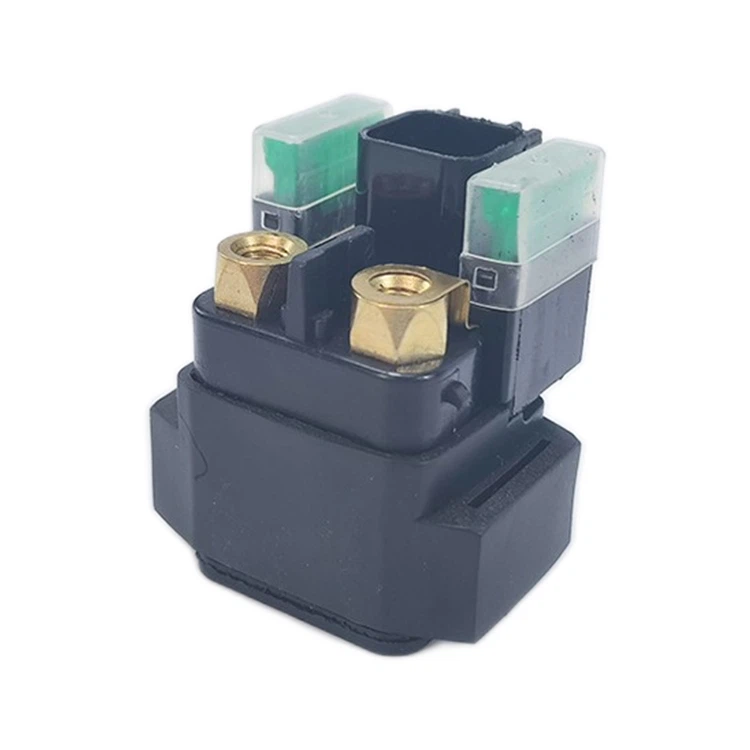
In addition, our Starter Relay Yamaha is designed to work in harmony with cooling systems, ensuring reliable starting and operation of Yamaha engines.
If you are interested in any of our products or need more information about passive cooling systems, we encourage you to contact us for a procurement discussion. We have a team of experts who can provide you with customized solutions based on your specific requirements.
References
- ASHRAE Handbook - HVAC Applications. American Society of Heating, Refrigerating and Air - Conditioning Engineers.
- Buildings for a Changing Climate: Passive Low - Energy Cooling. by Givoni, Baruch.
- Thermal Environmental Engineering. by McQuiston, F. C., Parker, J. D., & Spitler, J. D.