

What is the origin of the term 'Housing Nut'?
What is the origin of the term 'Housing Nut'?
In the vast landscape of mechanical engineering and automotive parts, the term 'Housing Nut' holds a significant place. As a dedicated supplier of Housing Nuts, I've often been asked about the origin of this seemingly simple yet crucial component. In this blog post, I'll delve into the history, functionality, and significance of the Housing Nut, shedding light on its journey through time.
Historical Background
The concept of nuts and bolts dates back to ancient times, with early examples found in various civilizations. However, the specific term 'Housing Nut' emerged as the need for specialized fasteners in complex mechanical systems grew. In the early days of industrialization, machinery became more intricate, requiring components that could securely hold parts together while also providing a stable housing for other elements.
The Housing Nut was developed to meet these requirements. It is essentially a nut that is designed to be used in a housing or a specific enclosure. This design allows for a more precise and secure fit, ensuring that the connected parts remain in place even under high stress or vibration.
Functionality and Design
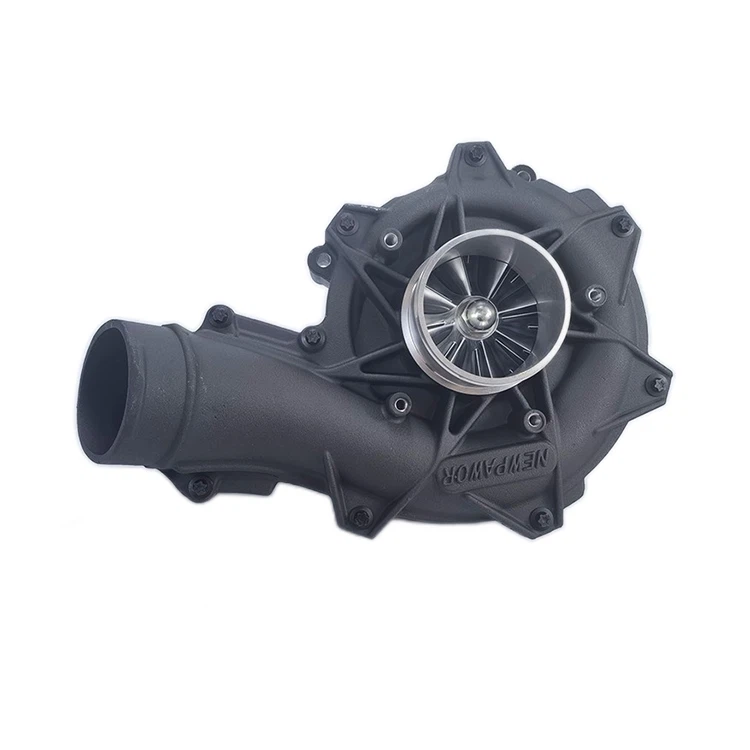
The primary function of a Housing Nut is to provide a threaded connection that can be tightened or loosened as needed. It is typically used in applications where a component needs to be securely attached to a housing or a base. For example, in automotive engines, Housing Nuts are used to secure various parts such as the Impeller Blade, Valve Spring Retainer, and Supercharger for Yamaha.
The design of a Housing Nut can vary depending on its intended application. Some Housing Nuts have a hexagonal shape, which allows for easy tightening using a wrench. Others may have a more specialized shape, such as a flanged or a knurled design, to provide additional grip or to fit specific requirements.

Significance in the Industry
The Housing Nut plays a crucial role in the mechanical and automotive industries. Its ability to provide a secure and reliable connection is essential for the proper functioning of various machines and vehicles. Without Housing Nuts, many components would not be able to stay in place, leading to potential failures and safety hazards.
In addition to its functional importance, the Housing Nut also contributes to the overall efficiency and performance of mechanical systems. By ensuring a tight and stable connection, it helps to reduce vibration and noise, which can improve the lifespan of the components and enhance the user experience.
Our Role as a Supplier
As a Housing Nut supplier, we understand the importance of providing high-quality products that meet the specific needs of our customers. We work closely with our clients to understand their requirements and offer customized solutions that are tailored to their applications.
Our team of experts has extensive knowledge and experience in the field of mechanical engineering, allowing us to provide technical support and guidance to our customers. We also invest in the latest manufacturing technologies and equipment to ensure that our Housing Nuts are of the highest quality and precision.
Contact Us for Procurement
If you're in the market for high-quality Housing Nuts, we invite you to contact us for procurement. Our dedicated sales team is ready to assist you with your inquiries and provide you with detailed information about our products and services. Whether you need a small quantity for a specific project or a large volume for mass production, we can meet your needs.
We believe in building long-term relationships with our customers based on trust, quality, and excellent customer service. By choosing us as your Housing Nut supplier, you can be confident that you're getting the best products and support in the industry.
References
- "Mechanical Engineering Handbook" by Myer Kutz
- "Automotive Engineering: Fundamentals, Modeling, and Control" by Giorgio Rizzoni
- Various industry publications and research papers on fasteners and mechanical components.